
Weigh-in-Motion
Overview
Weigh-in-Motion (WiM) is a system that measures the axle load of passing vehicles to capture the traffic load and wear of the infrastructure such as bridges and roads. Overloading of freight vehicles, which occurs in 15-20% of the measured instances, causes unnecessary wear and tear of roads and results in severe traffic safety issues induced by damaged road structures.
WiM solution measures the weight of vehicles in motion with a >98% accuracy – enabling governments and local authorities to make precise predictions of road degradation, aiding in the maintenance of the infrastructure. With the information collected by our system, active enforcement for overloaded vehicles becomes possible.
Solution advantages
Improved traffic flow
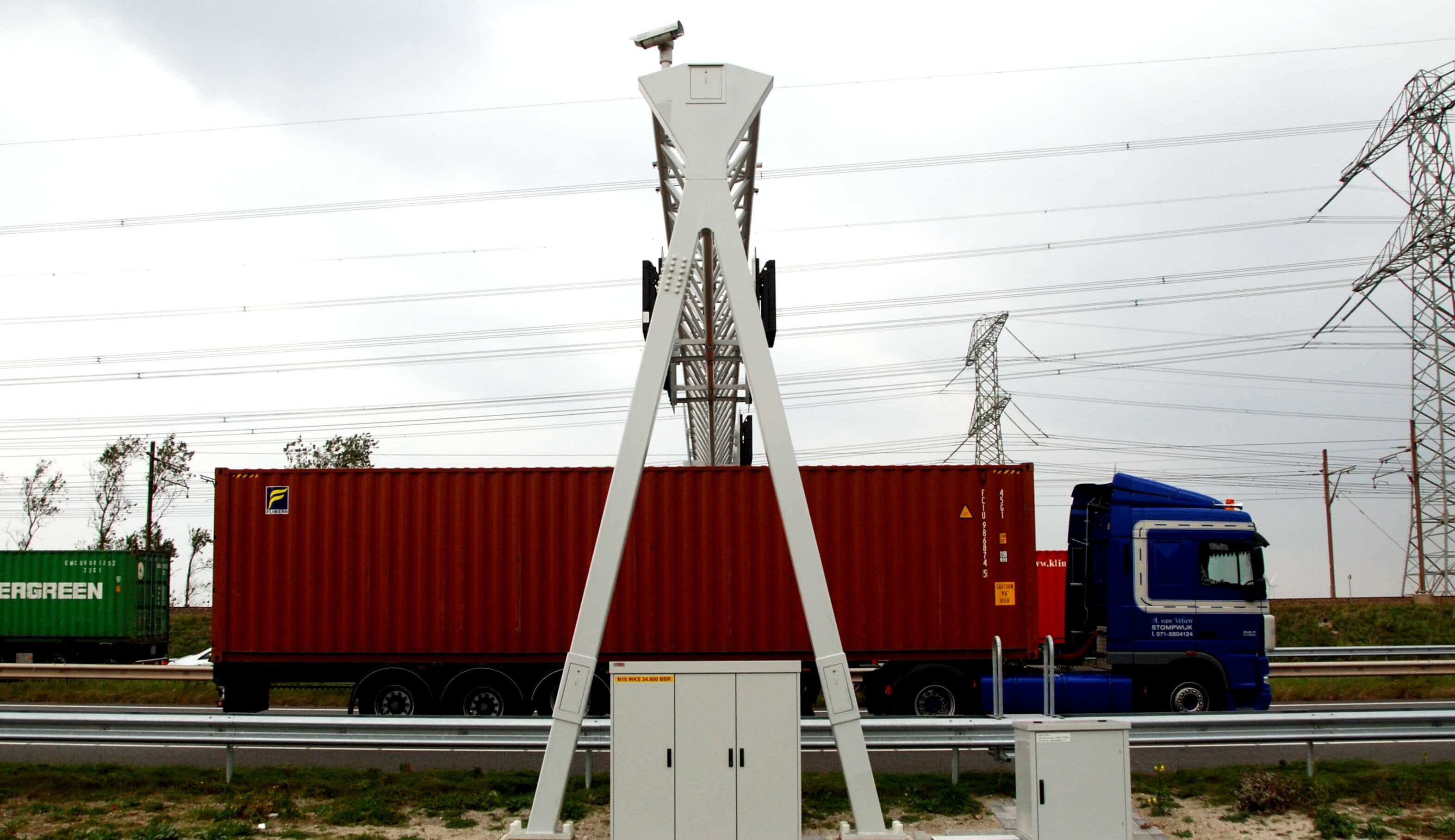
Improved traffic flow as the trucks do not need to be taken off the road during the measurement. Weigh-in-motion is dynamic weighing system: the weight of the trucks is checked as they pass a road or bridge, without slowing them down. The system uses Scapeye as the ANPR engine to verify the license plates of the passing trucks, so that enforcement actions can be taken.
Flexible setup
The flexible setup makes it easy to apply the system to existing infrastructure. Manual weight checking of heavy duty vehicles is no longer necessary. The accuracy of the sensors is better than 7% deviation of the gross vehicle weight. Additionally, costs of WiM installation are significantly smaller than the On-board Weighing (OBW) requirement.
Improved maintenance planning
Reduces the operational costs of road operators by empowering them with accurate predictions of road degradation and predictive maintenance scenarios. Weigh-in-Motion system can also be used for the verification of the On-board Weighing (OBW) systems, ensuring proper calibration of such solutions.
Solid Back-office
The effective system design ensures quick and correct enforcement. Weighing sensors (scales) and inductive loops are embedded in the road surface. As a vehicle passes, each axle is weighed twice: at the first scale and at the second scale. The scales and loops trigger a set of cameras: ANPR cameras read the front and rear plates. All the information is combined into registration records, one for each passing vehicle with an overview picture of the whole truck.
Case study

Amsterdam
The project started as a pilot for measuring to what extent the Amsterdam bridges suffer from traffic. We installed sensors on four lanes of a bridge in the Amsterdam harbor area. 8 sensors per lane, no ANPR was required. The sensors measured vehicle weights, axle weights and axle distances of all passing traffic. The pilot started in August 2020 and ended in October 2022. During that period, the systems have scanned 9.3 million vehicles. We calibrated the system with five trucks almost every month. As a result, the customer gathered enough data to fill their bridge traffic weight models accurately.